
Deák Borostyán
Physiotherapist
Physiotherapy studies: University of Pécs
Full profile in Hungarian
Treatment
New patients always start with the first assessment. Returning patients can book directly: "Manuálterápia" in Salonic (opens in a new tab).
Manual therapy is both a treatment and a diagnostic method: manual techniques also help the therapist judge how severe a musculoskeletal problem is during the examination. Used regularly, it can improve how joint surfaces move against each other and support joint circulation.
Manual techniques can also influence the mobility of soft tissues, including fascia, and provide sensory input that helps the body sense joint position and control movement.
Manual therapy and physiotherapy are not alternatives: a change achieved by hand has to be built into your movement through active exercise. That is why, in your treatment plan, manual therapy is followed by physiotherapy.

A manual therapy approach based on joint mobilisation, used for spinal, neck and shoulder complaints and matched to the examination findings.
A clinical reasoning and treatment concept: examination and re-examination, following how your symptoms change, joint mobilisation, and adjusting treatment to how you respond.
The concept of New Zealand physiotherapist Brian Mulligan: the therapist’s hands-on support and your own active movement at the same time, watching movement quality and how symptoms respond.
A professional framework for myofascial connections and movement chains: it helps us see how a local complaint may relate to how other regions of the body work.
Treatment based on the Fascial Distortion Model, used for example in acute pain or restricted movement, guided by the examination findings and your response to treatment.
Treatment starts at your first visit, straight after the assessment.
History and a detailed examination: the nature of the pain, joint range of motion, muscle strength and control, movement patterns and compensations.
A personal plan with the recommended manual therapy methods and a schedule.
If you agree with the plan, treatment starts at the first visit.
Manual therapy is one of the main tools at level 1 of the MozgásPiramis®: at this level the aim is to reduce your current pain and complaint, with manual therapy and physiotherapy, supported by physical therapy modalities where needed.
Physiotherapists who list this treatment among their specialisms. Our team speaks Hungarian and English.
Physiotherapist
Physiotherapy studies: University of Pécs
Full profile in Hungarian

Physiotherapist
Physiotherapy studies: University of Szeged, Faculty of Health Sciences; Flossing course
Full profile in Hungarian
There are no rough or sudden movements as in bone-setting. The therapists work within your tolerance, and you can tell them at any time if something is uncomfortable.
The number of sessions can never be guaranteed in advance; it depends on your response and the assessment. You may feel the effect after a few sessions; you get a realistic picture at the consultation that follows the assessment.
Manual therapy is done by the therapist’s hands and works on joint mobility, soft tissues and pain. In physiotherapy you work actively, which builds the change into your movement. Here the two build on each other rather than replace each other.
With acute inflammation, a fever or a fresh injury, see a doctor first. If you are unsure, call us and we will help you decide.
What conservative treatment of a herniated disc means: examination, manual therapy, physiotherapy and gradual loading at MozgásKlinika Retek utca.
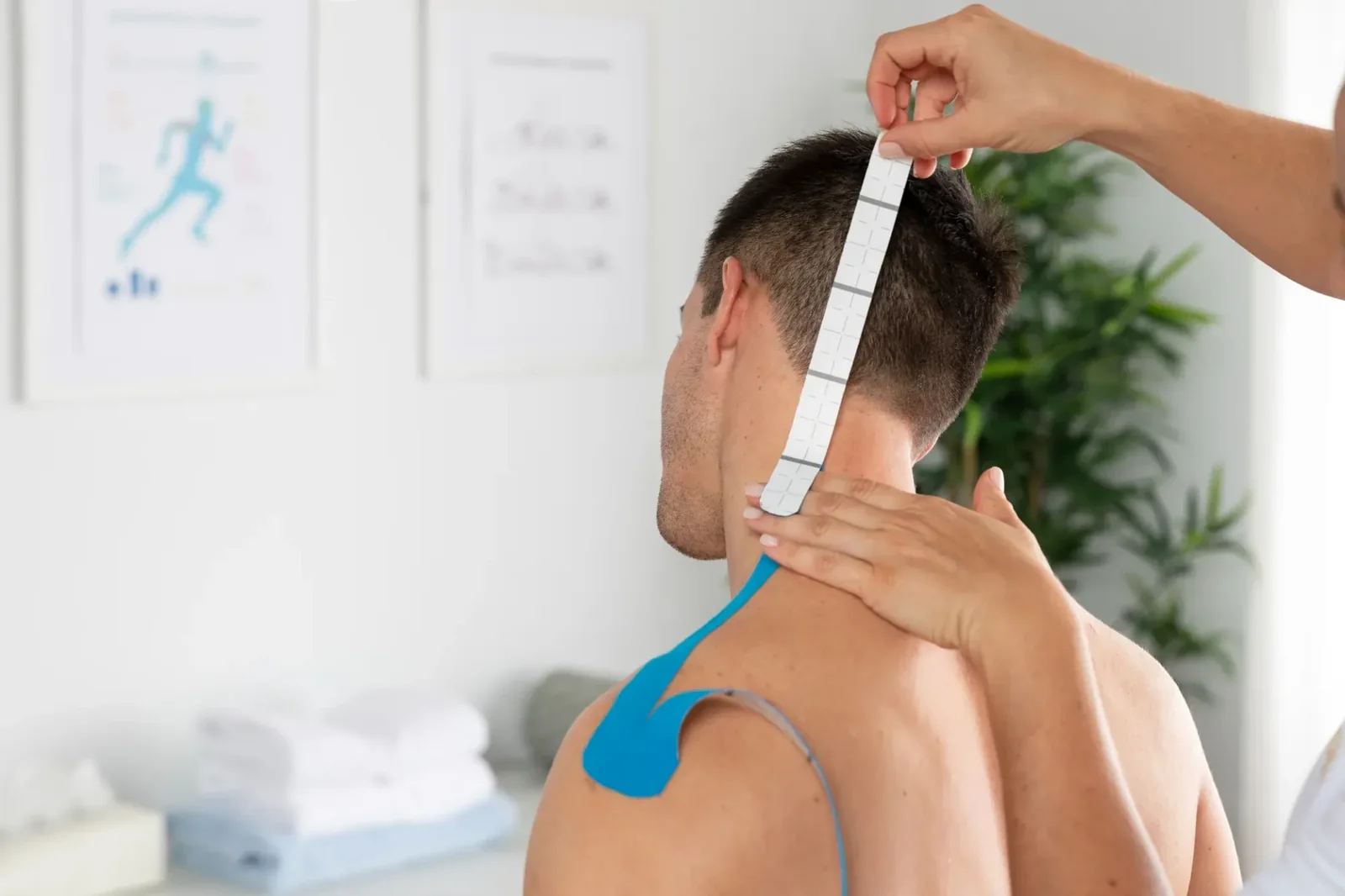
Neck pain, a stiff neck, posture changes in the upper back: how MozgásKlinika Retek utca, near Széll Kálmán tér in Budapest, examines and treats them.

Posture is not a static good or bad position. What to know about desk work, variety of load, and when it is worth seeing a physiotherapist in Budapest.
Last updated:
This page is general information and does not replace an in-person assessment. Services, prices, equipment and opening times are subject to change. For current details, call us or see the pages of MozgásKlinika’s own clinics: our clinics.
The first consultation lasts 60 minutes, costs 24,990 HUF, and treatment starts in the same session. No referral needed.